Hiking Assist Exoskeleton
The Load-Assisted Hiking Exoskeleton is primarily designed for outdoor/wilderness scenarios. By mounting the load onto the back of the exoskeleton, users can achieve a load reduction efficiency of up to 70%.
This exoskeleton version is available in two configurations: a battery-free version (pure mechanical structure) and a battery-powered version. The battery-equipped model additionally provides assistance for walking and running.
1. Load-Maneuverable Exoskeleton
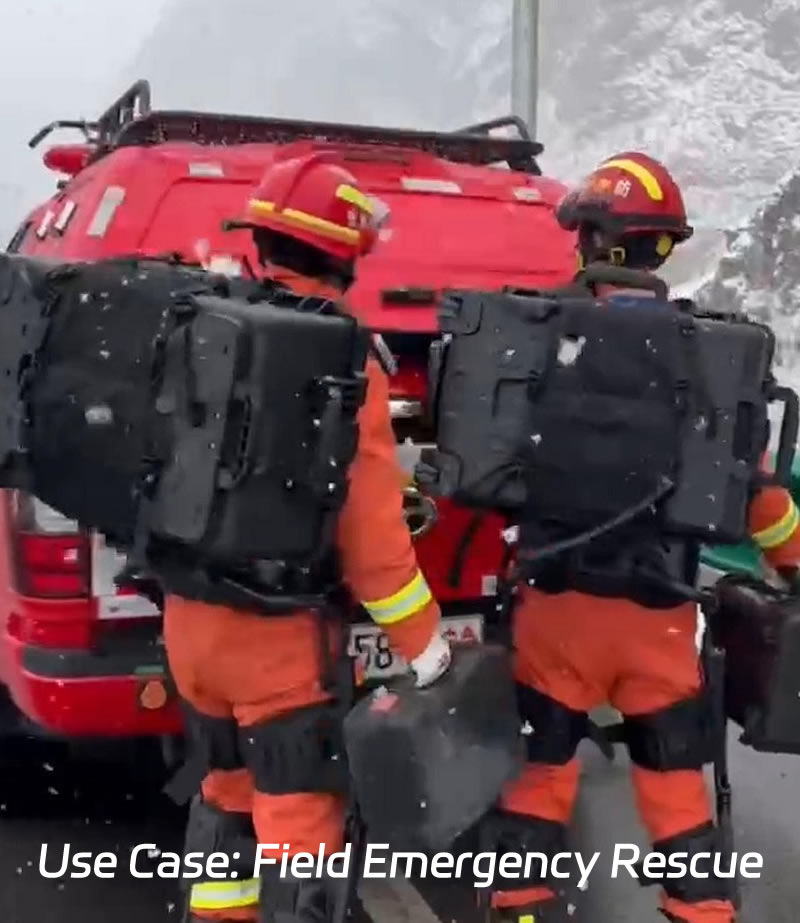
- Primarily designed for scenarios requiring heavy-load, long-distance hiking/marching.
- Through the exoskeleton's mechanical structure, it reduces the pressure of heavy loads on the human body.
| Technical Specifications | ||
|---|---|---|
| 1 | Suitable wearer height | 160-190 cm |
| 2 | Exoskeleton dead weight | ≤6 kg |
| 3 | Rated load capacity | 35 kg |
| 4 | Maximum load capacity | 110 kg |
| 5 | Assistance efficiency when standing | 70% |
| 6 | Assistance efficiency when walking | 45% |
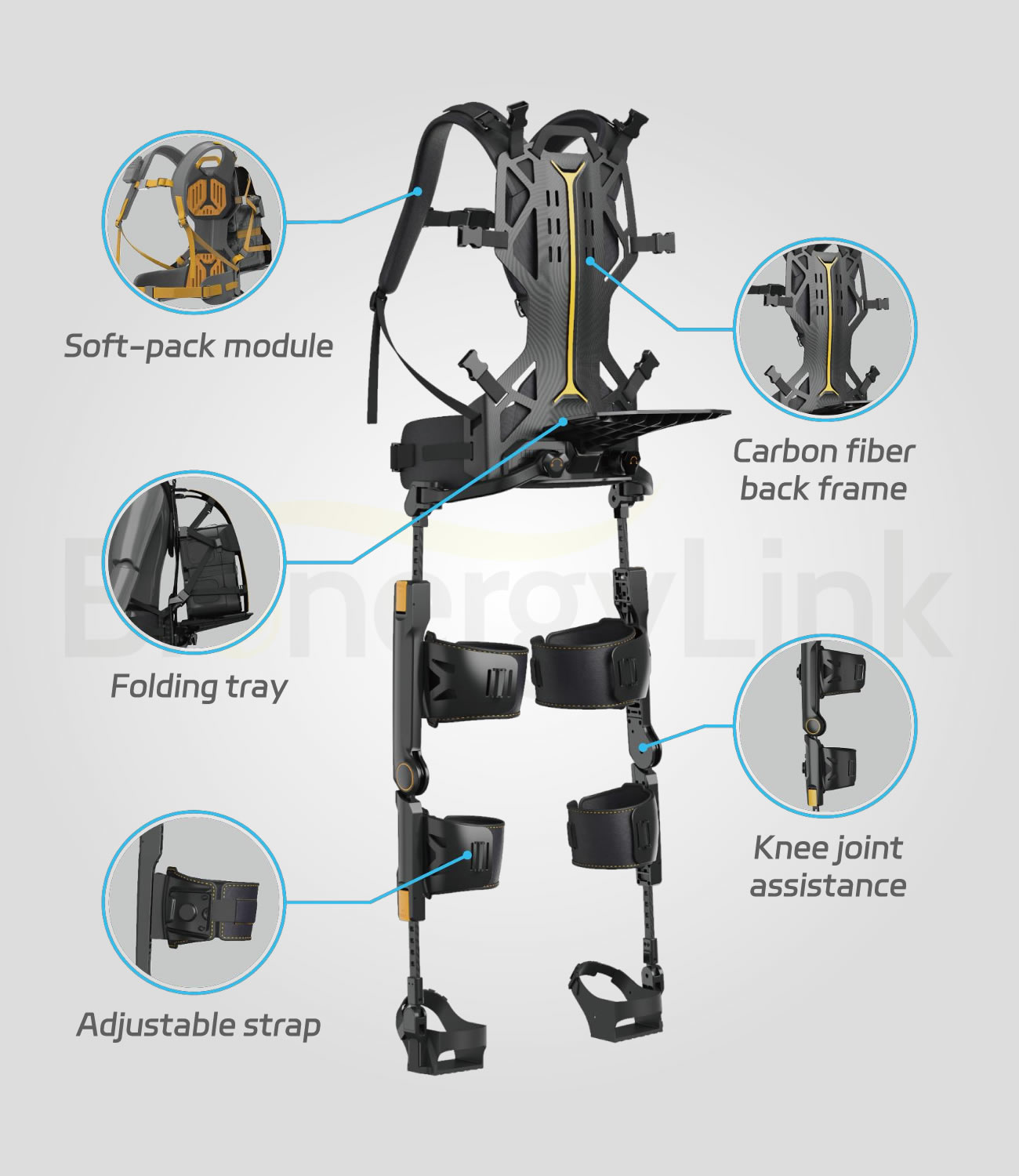
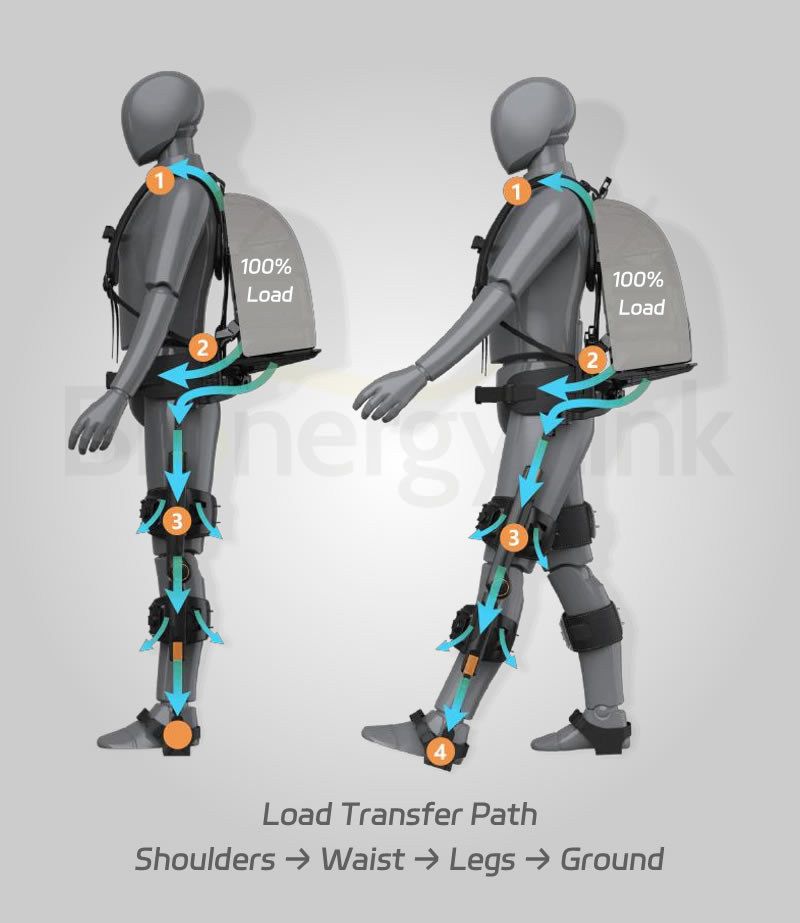
- Without Exoskeleton: The human shoulders bear 100% of the heavy object's weight.
- With Exoskeleton: The weight of the load is transferred through the exoskeleton's mechanical structure to the ground, thereby achieving load transfer and reducing the pressure of the heavy object on the human body.
2. Load-Maneuverable Exoskeleton Lite Version
- Primarily designed for scenarios requiring medium-load, long-distance hiking.
- The unit features a quick-swap equipment module—wearers can simply place and click to install or remove professional equipment such as blowers, ventilators, and other devices. The product balances load-bearing capability with flexibility.
| Technical Specifications | ||
|---|---|---|
| 1 | Suitable wearer height | 160-190 cm |
| 2 | Exoskeleton dead weight | 4.2 kg |
| 3 | Rated load capacity | 25 kg |
| 4 | Maximum load capacity | 70 kg |
| 5 | Assistance efficiency when standing | 60% |
| 6 | Assistance efficiency when walking | 40% |
| 7 | Materials | Carbon fiber, aviation aluminum, etc. |
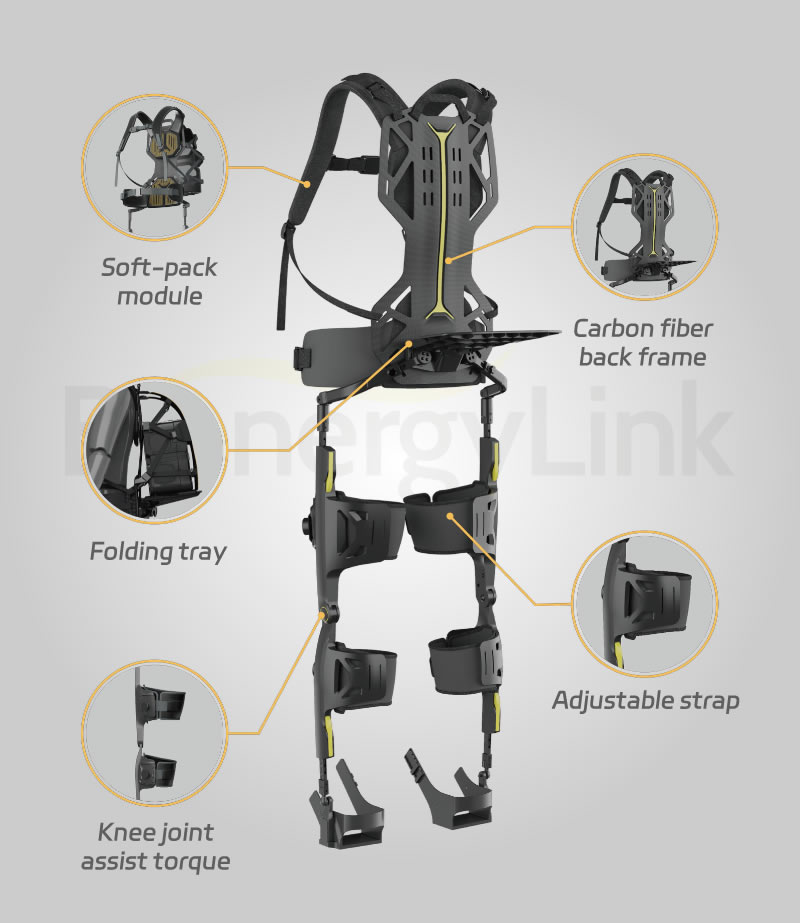
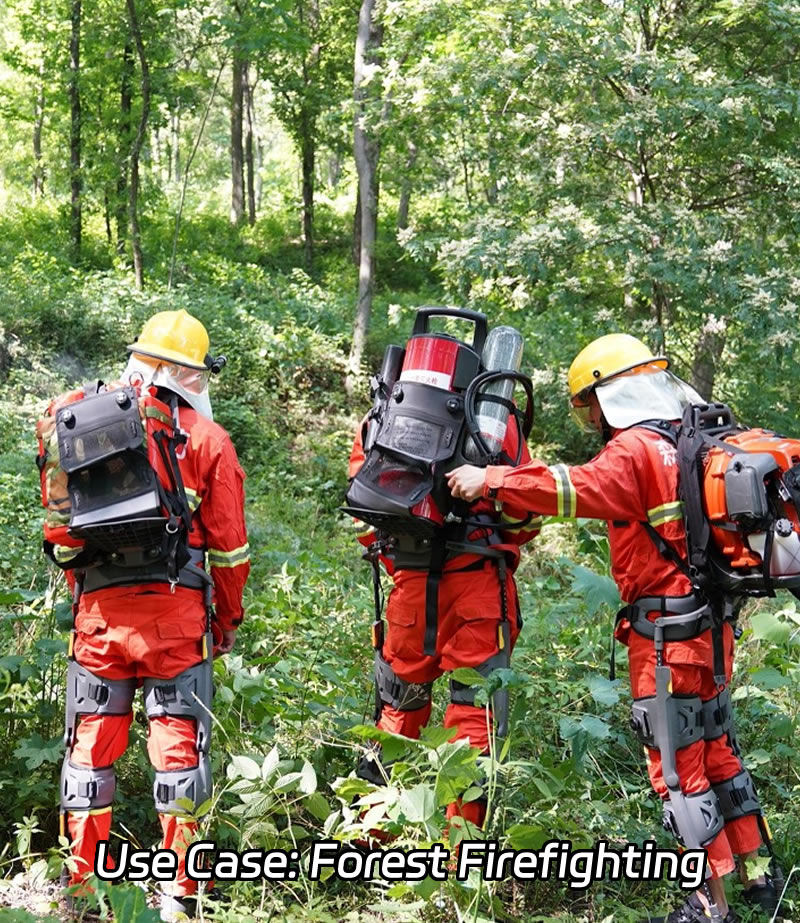
- Without Exoskeleton: The human shoulders bear 100% of the heavy object's weight.
- With Exoskeleton: The weight of the load is transferred through the exoskeleton's mechanical structure to the ground, thereby achieving load transfer and reducing the pressure of the heavy object on the human body.
3. Load-Maneuverable Exoskeleton (Battery Version)
- Utilizes an external power source to provide assistance for walking and running.
- The high-performance carbon fiber load-bearing back panel assists in carrying heavy objects, reducing to a certain extent the pressure on the wearer's shoulders.
| Technical Specifications | ||
|---|---|---|
| 1 | Suitable wearer height | 160-190 cm |
| 2 | Exoskeleton dead weight | 4.5 kg |
| 3 | Average walking speed with gear | 6 km/h |
| 4 | Maximum load capacity | 70 kg |
| 5 | Battery life | 3-4 hours |
| 6 | Assist level | 5 adjustable levels, max 26 N·m |
| 7 | Materials | Carbon fiber, aviation aluminum, etc. |
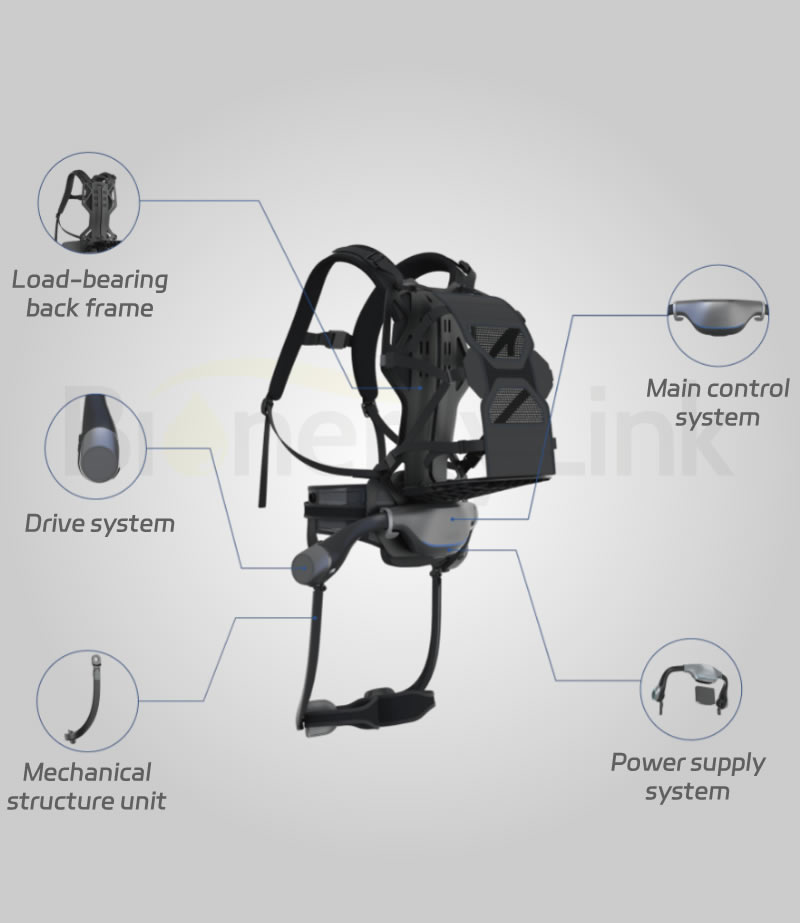
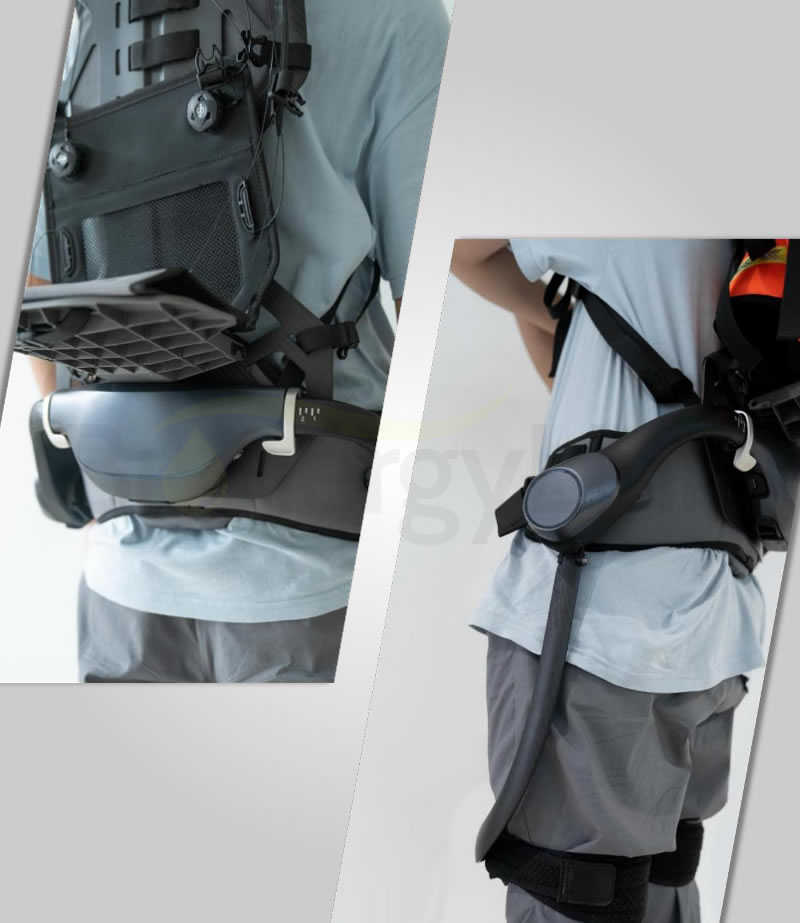
- Utilizes an external power source. Dual-side motors intelligently respond to the wearer's movement intent, providing appropriate assistance for walking, running, and climbing.
- The high-performance carbon fiber back panel assists in securing and carrying heavy loads, with a maximum payload capacity of 70 kg. The back panel effectively reduces pressure on the wearer's shoulders when carrying heavy objects.